Working as a mobile nail technician takes more than a full diary. Two profitable appointments can still create a poor working day if they involve backtracking, delays and an unpaid hour of travel between clients.
The short answer: define a travel area, allocate particular days to each zone, add realistic buffer time and explain any travel charges clearly. Then build each day in geographical order in your calendar.
Define an area you can genuinely cover
Start from your usual departure point and measure several journeys at the times you normally work. Ten kilometres may take 15 minutes in one area and 45 in another.
Create three simple levels:
- core area: short journeys you can accept easily;
- extended area: appointments grouped on selected days or subject to a fee;
- outside the area: exceptional travel, an individual quote or a polite refusal.
Present the towns, postcodes or radius clearly on your booking materials. Before enquiring, a client should know whether their address involves a fee or a special condition.
Group areas by day
The biggest gain often comes from grouping. For example, serve the north of your area on Tuesday, the centre on Wednesday and the south on Thursday. This reduces mileage and increases the number of slots you can actually sell.
Do not make the rule too rigid at first. Test it for a month, then review where demand is strongest. Keep one flexible slot for a regular client or an exceptional situation.
Simple wording avoids frustration: “Appointments in your area are available on Tuesdays and Thursdays.” The restriction becomes a predictable schedule rather than a personal refusal.
Calculate the real gap between two clients
The journey time displayed by a map is not enough. Your buffer should include:
- packing and loading equipment;
- traffic and finding parking;
- entering the building or property;
- setting up and preparing the workstation;
- reasonable delays.
If the estimated drive is 20 minutes, a 20-minute gap makes lateness almost inevitable. Try a 35- or 40-minute buffer depending on your area and equipment.
Record the full appointment duration
The duration in your calendar should cover the whole period when you cannot see another client. For a mobile service, include setup and packing within the service duration, then keep travel as a separate gap between appointments.
Do not shorten the service artificially to fit in another booking. One difficult access point or extra piece of nail art will then delay the entire route.
Set clear travel charges
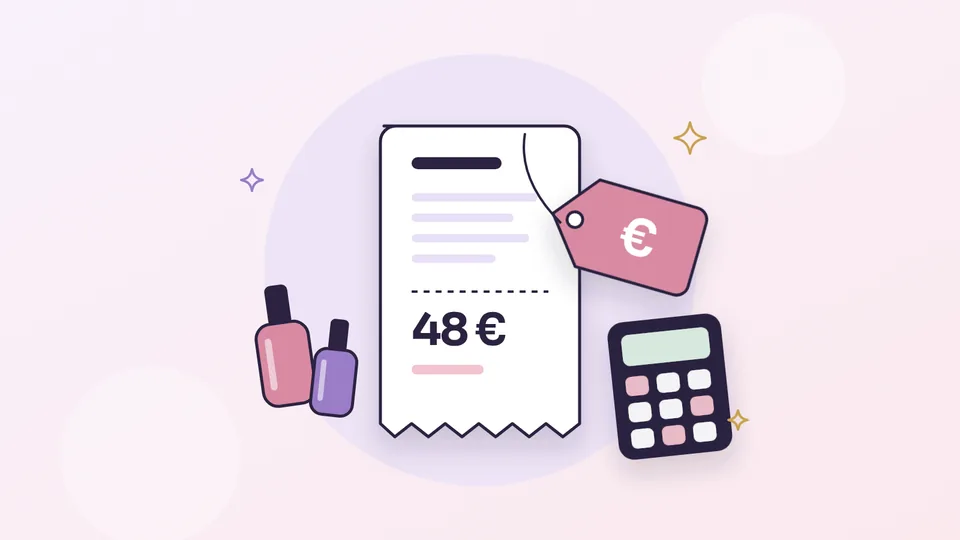
You can include travel in your service price, charge a fixed amount by zone or set a minimum booking value. The right model depends on your clients and how often you travel.
At a minimum, calculate fuel or transport, vehicle wear, parking and unpaid time. Then make sure the final price remains easy to understand.
In France, additional charges known in advance, including transport costs, must be brought to the consumer’s attention. The DGCCRF guidance on price information explains the general framework.
To check whether the service remains profitable once travel is included, use our method for calculating an infill price and the free service price calculator.
Ask for useful information before the first visit
Before confirming, check:
- the full address and the name on the entry system;
- the floor and whether there is a lift if your equipment is heavy;
- parking options;
- the space available to work;
- access to a power socket and suitable lighting;
- pets or children that may affect setup;
- a phone number that will be answered on the day.
Keep only information that serves a real purpose and avoid sensitive details you do not need. Internal notes in the client record can preserve a practical instruction for the next visit.
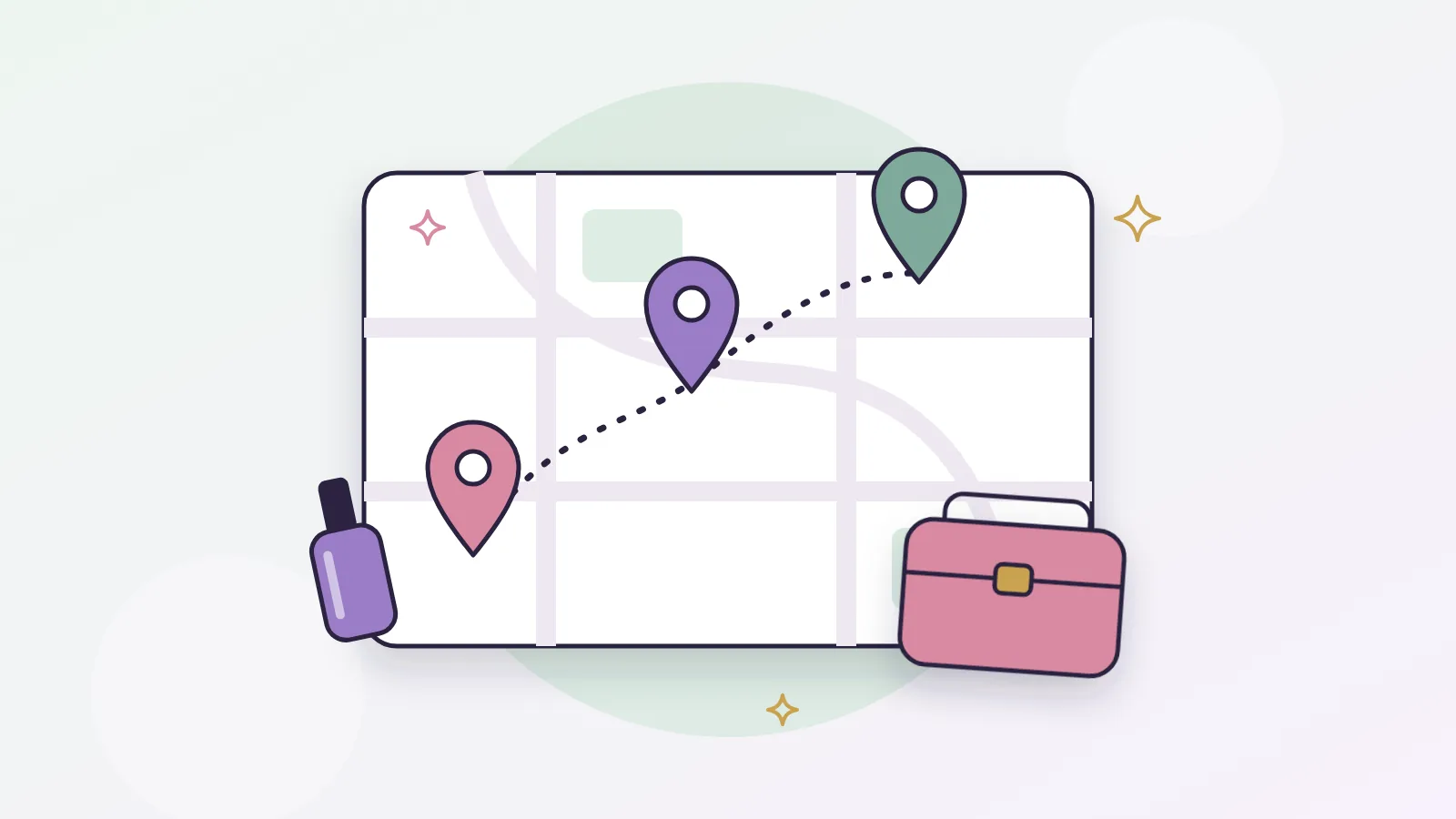
Build the route in the right order
The day before, open a mapping app and arrange the addresses. Where possible, put the furthest appointment at the beginning or end of the day to avoid travelling out and back twice.
For example:
- 9 am: furthest area;
- 11.15 am: a client on the return route;
- break and safety margin;
- 2.30 pm: two clients in the same town;
- finish near your return point.
Flowa is not route-optimisation software and does not automatically order addresses. Use a mapping tool for that step. The Flowa calendar then keeps the slots, durations, clients and final prices together.
Prepare and check an organised kit
A checklist prevents unnecessary return journeys:
- essential products and planned colours;
- enough disposable supplies;
- electrical equipment and a suitable extension lead;
- lighting;
- cleaning and disinfection supplies;
- separate bags for clean and used items;
- a small backup kit for common omissions.
Prepare the kit the night before from the services in your calendar. In the morning, only a final check should remain.
Leave room for delays
One late start can affect the whole day. If a client lets you in later than planned, explain the possible impact immediately. Set a limit beyond which the service must be shortened, moved or cancelled, while remaining consistent with your published terms.
Reminders reduce forgotten appointments but do not replace route planning. See our nail appointment reminder examples and method for handling no-shows.
Review profitability by area
Each month, compare appointments, mileage, travel time, expenses and revenue for every zone. A popular area can still be unprofitable when short appointments are widely scattered.
You can then reserve some areas for longer services, raise the minimum booking value or offer grouped days. Base the decision on several weeks of data rather than one difficult route.
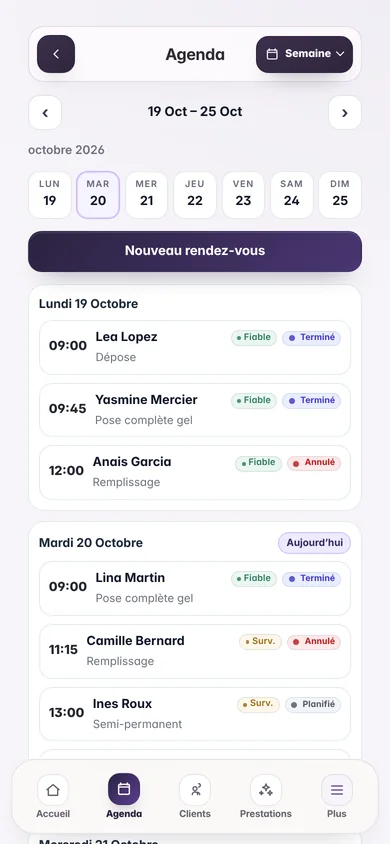
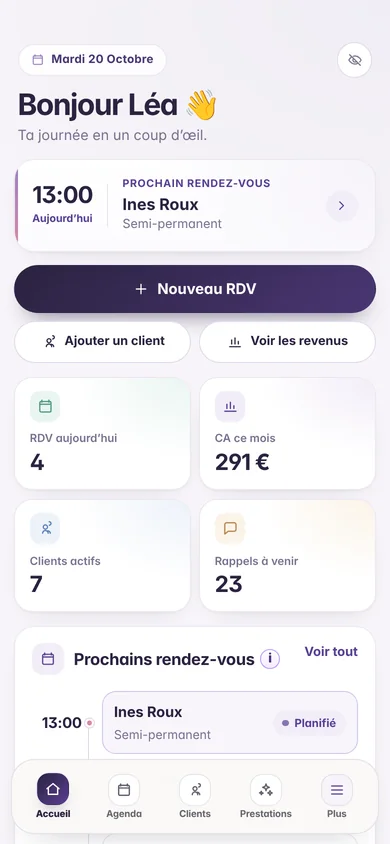
Use a mobile calendar as your reference point
On the road, you need quick access to the client, time, service and useful notes. The mobile beauty business software page presents Flowa’s mobile calendar, client records, reminders and revenue tracking. The online calendar for mobile beauty therapists explains how clients can request suitable slots.
An efficient route remains simple: few zones per day, realistic timings, visible charges and a buffer between appointments. That structure protects both punctuality and profitability.
Frequently asked questions
How should a mobile beauty travel fee be calculated?
Add the real vehicle cost per kilometre—fuel, maintenance and insurance—to the value of travel time that cannot be sold to another client. Then simplify the result into two or three zone-based fees that are easier to explain than a per-kilometre calculation.
What travel radius should a new mobile nail technician choose?
Start with an area you can cover reliably during busy traffic, then expand only if the days remain profitable. A smaller area with full routes is usually better than a large area with empty journeys.
Should travel charges be displayed?
Yes. Any fee known in advance should be shown before the service is booked. Display the zones and charges on your booking page and in the confirmation.