
A client arrives for waxing. Two months ago, she began an acne treatment that she has not mentioned. Without an up-to-date consultation record, you may not know until her skin reacts. A well-maintained beauty therapist client record is a safety tool first and a loyalty tool second.
The short answer: record identity and contact details, allergies and contraindications, technical notes for each treatment and client preferences. Review health information at every visit, obtain explicit consent for sensitive data and retain only what you genuinely need.
What should a beauty therapist client record contain?
Identity and contact details
Record the client’s name, phone number and email. If you send reminders, record the appropriate preference or consent for that communication. Date of birth is only useful where you have a genuine reason, such as age-restricted services or safeguards for minors.
Allergies and sensitivities
This is the most important section. Ask consistently about:
- known allergies, including cosmetics, fragrance, latex, rosin in some waxes, metals and plants;
- previous reactions after treatment, such as redness, spots, burning or itching;
- sensitive or reactive areas of skin.
Contraindications and precautions
Questions depend on the treatments you provide. Common examples include:
- waxing: isotretinoin or retinoid use, broken or irritated skin, recent sunburn or varicose veins in the area;
- facials and peels: current dermatological treatment, inflammatory acne or planned sun exposure;
- electrical treatments: pacemaker or implant, pregnancy;
- foot treatments: diabetes or circulation problems;
- massage and essential oils: pregnancy, breastfeeding, epilepsy or asthma.
The record does not diagnose a condition. It helps you ask the right questions. If you are uncertain, adapt or postpone the treatment and ask the client to obtain medical advice.
Technical notes for every treatment
Record products used, wax temperature, processing time, equipment and settings, observed reactions and aftercare advice. These notes help reproduce a good result and explain what was done if a question arises later.
Preferences and relationship details
Note what the client likes and dislikes—the atmosphere, massage pressure or fragrance—along with relevant goals and usual availability. This is what turns a competent service into a personalised experience.
A first-visit consultation questionnaire
A short questionnaire before a new client’s first treatment saves time and provides reassurance. Keep it to one page:
- Do you have any known allergies? If so, which ones?
- Are you currently receiving medical or dermatological treatment?
- Are you pregnant or breastfeeding?
- Have you ever reacted to a beauty treatment?
- Is there a skin or circulation condition, or an implant, I should consider?
- What would you like to achieve from this treatment?
Finish with a statement about updates: “At each visit I will ask whether anything has changed.” Then follow through, because a contraindication can appear between appointments.
Client records and GDPR
Allergies, medication and health conditions are health data. Under GDPR they are special-category data, whose processing is prohibited unless an exception applies. One relevant exception is the person’s explicit consent for a specific purpose. Consent to store health information is distinct from agreement to receive a treatment. The French data protection authority explains the framework in its guidance on health-data processing.
In practice:
- collect only what is needed for treatment safety, not a complete medical history “just in case”;
- obtain explicit consent to store the information and explain its purpose;
- tell the client how to access, correct or request deletion of the record;
- protect access, avoiding unattended paper files and unprotected shared documents;
- set a retention period and remove records that are no longer required. Different rules may apply to marketing data.
These are general principles, not legal advice. Consult your data protection authority or a legal professional where the situation is complex.
Paper, spreadsheets or client management software?
A paper notebook is familiar but can be lost or damaged, cannot be accessed remotely and provides little protection. A spreadsheet is easy to share—sometimes too easy—and becomes hard to read as notes accumulate.
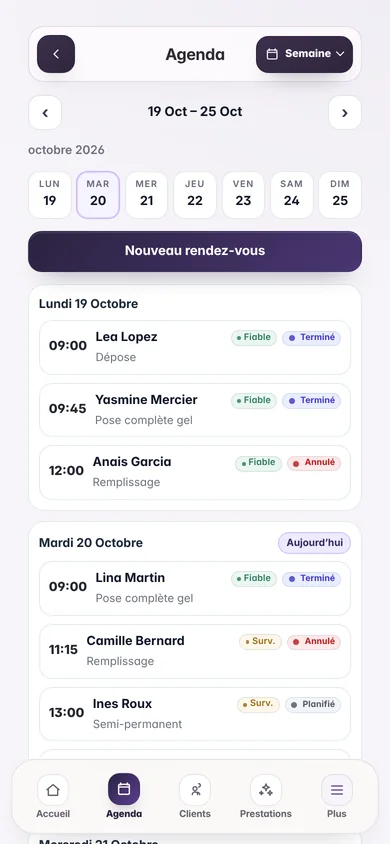
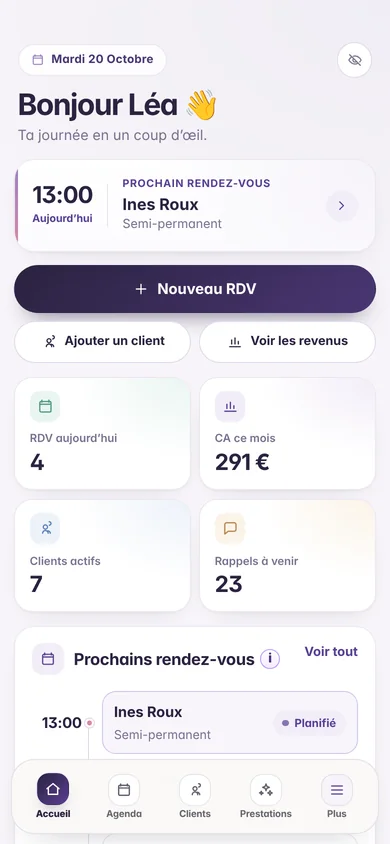
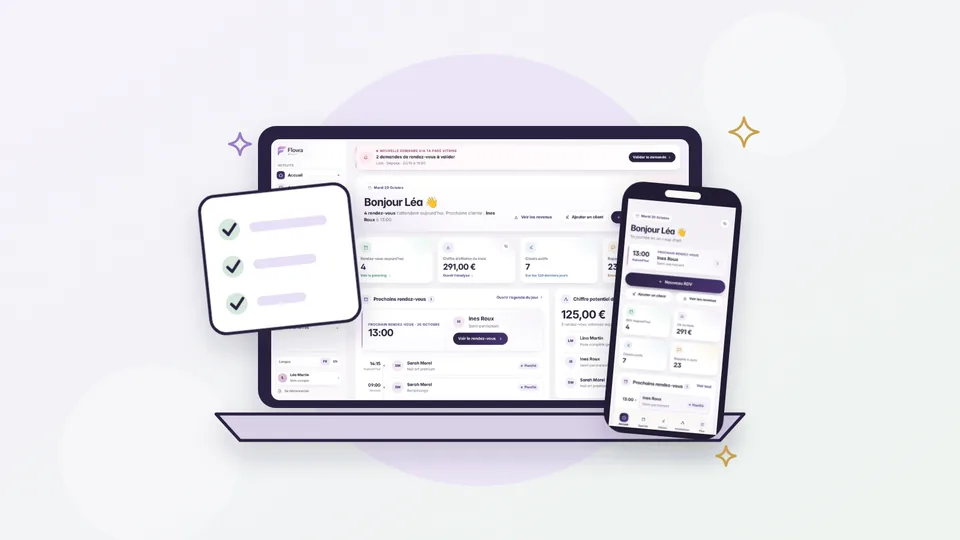
Client management software connects the record with the calendar, so warnings are visible when you open the appointment rather than after the treatment. In Flowa, every client has dedicated allergy and sensitivity fields, technical notes, complete appointment history and preferences. Account access is protected, a record can be deleted when required and business data can be exported.
A three-step routine
- Before the treatment: review warnings and ask, “Has anything changed since your last visit?”
- During the treatment: immediately record a reaction or unusual setting.
- After the treatment: complete technical notes and offer the next appointment.
Five minutes per client is enough to improve safety, save time at the next visit and show clients that their experience is remembered.
Learn how Flowa supports independent beauty therapists and explore the digital client record. If you are comparing tools, read our guide to choosing software for an independent beauty business.